随心提问或搜索...
 ESC 2026 DiscussionExplore the Hot Line trials, expert perspectives, and key takeawaysExplore the discussion→
Hot Research Today
Papers from every journal, all in one place。 创建自定义信息流。
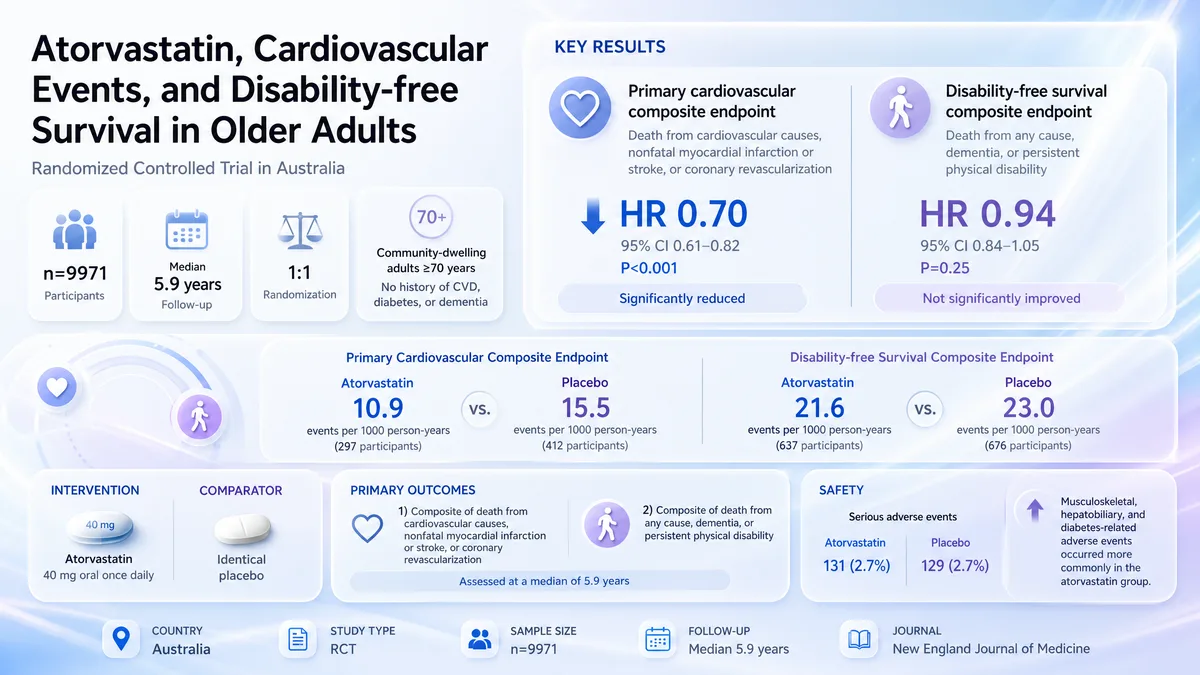
RCT · n=9,97123 次提及Featured in PodcastNEJM Highlight
8月28日ZoungasNew England Journal of Medicine
Atorvastatin cuts major CV events ~30% vs placebo in older adults without improving disability-free survival.
Supports statin initiation for CV prevention in adults ≥70 without CVD; confirms event reduction in primary prevention but leaves disability-free survival benefit open.
ASACC Journal Scan
The risk of heart attack and stroke is a concern for older people and knowing there is an effective measure for lowering that risk will be a huge reassurance to older people and their families. We hope to see updated guidelines to help clinicians make use of these new findings.
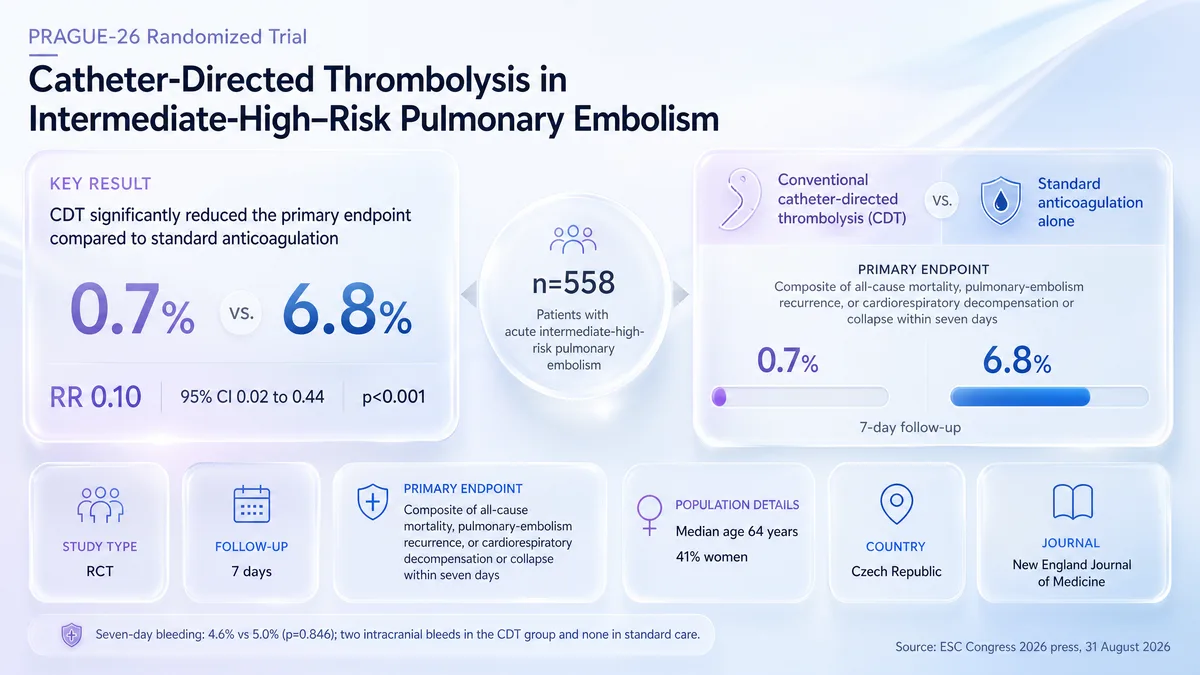
RCT · n=5589 次提及ACC Journal Scan (X) Highlight
8月31日KroupaNew England Journal of Medicine
Catheter-directed thrombolysis reduces mortality, PE recurrence, or decompensation ~90% vs standard anticoagulation.
Supports catheter-directed thrombolysis in intermediate-high-risk PE; confirms early-event reduction versus anticoagulation alone in this RCT.
 Viktor Kočka
In contrast to interventions for myocardial infarction or stroke, there have been very few advances in the treatment of [PE] over the last 20 years. This has led to a considerable unmet clinical need that we can't ignore.
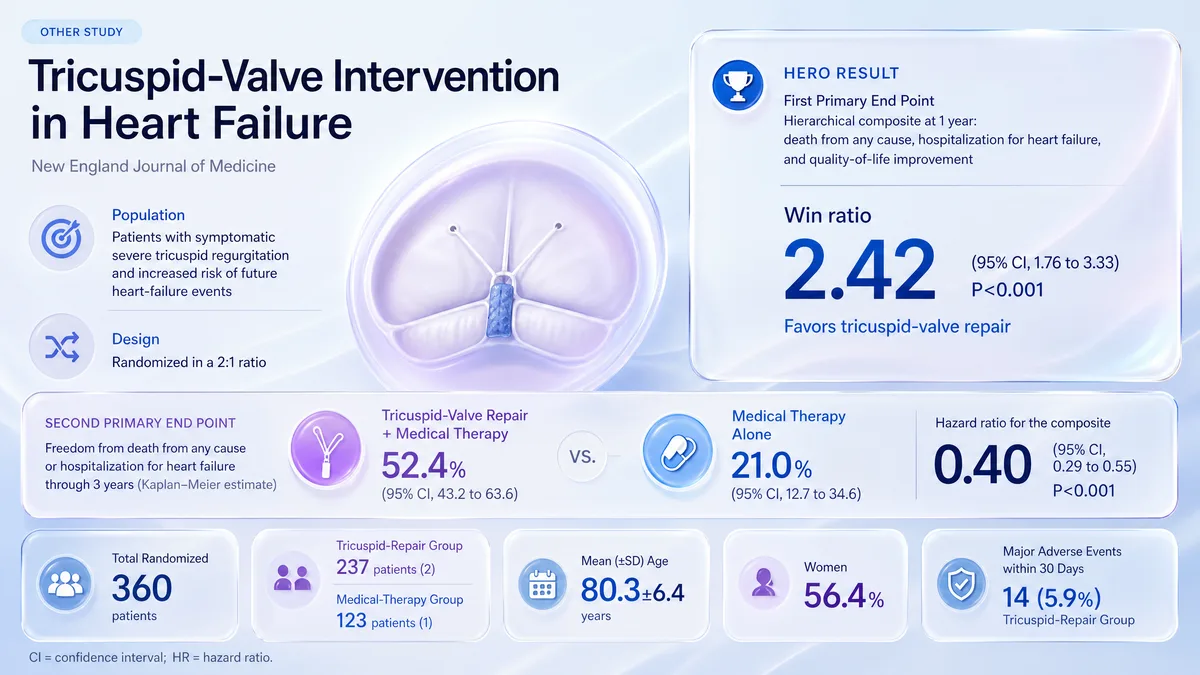
RCT · n=36016 次提及Expert CommentaryTrending on X
8月30日HausleiterNew England Journal of Medicine
Transcatheter tricuspid repair cuts death or HF hospitalization ~60% versus medical therapy.
Supports transcatheter tricuspid repair plus medical therapy in symptomatic severe tricuspid regurgitation; delivers first randomized evidence of hard-endpoint benefit.
 Jörg Hausleiter
Among these high-risk patients, transcatheter tricuspid valve repair on top of medical therapy resulted not only in quality-of-life improvements but also in meaningful and sustained reductions in hard clinical outcomes, which has not been demonstrated before with the intervention.
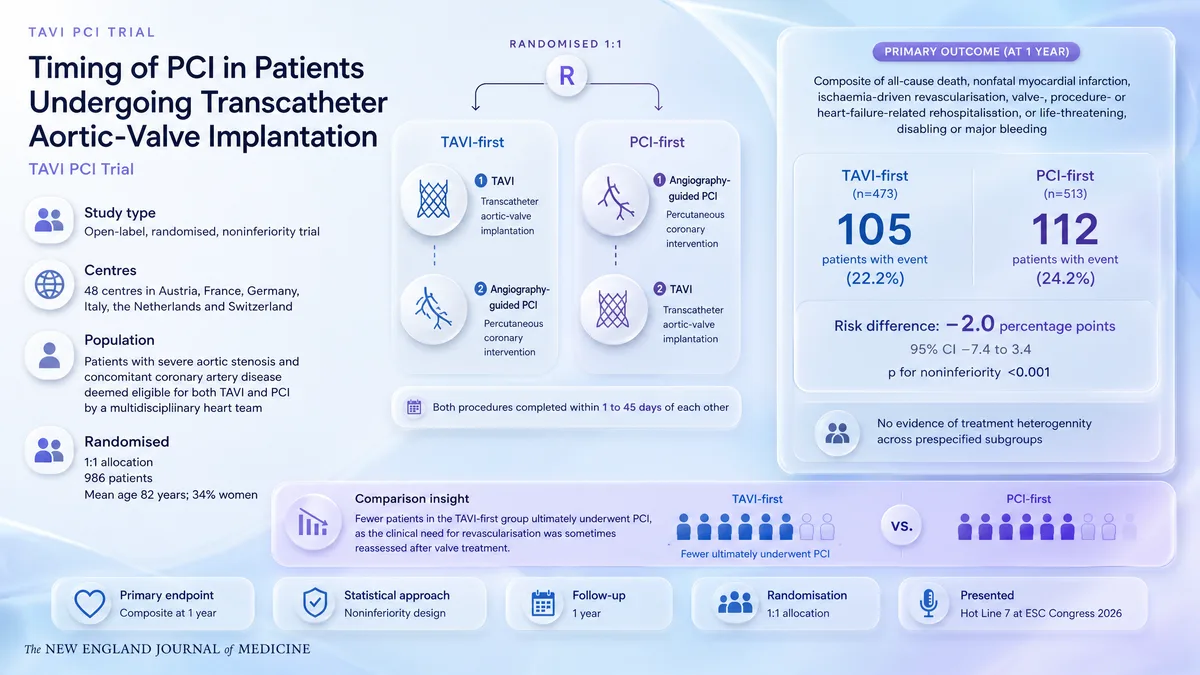
RCT · n=98626 次提及ACC Journal Scan Highlight
8月30日StähliNew England Journal of Medicine
TAVI followed by PCI is noninferior to PCI followed by TAVI for 1-year major events.
PCI timing in TAVR patients with CAD remains unresolved; leaves open whether omitting routine pre-TAVR PCI is safe.
ASACC Journal Scan
Importantly, this was not because coronary access was impaired after TAVI. Rather, once the valve had been treated, the clinical decision about whether PCI was still necessary sometimes changed.
RCT · n=2646 次提及Expert CommentaryNEJM Highlight
8月30日ZhangNew England Journal of Medicine
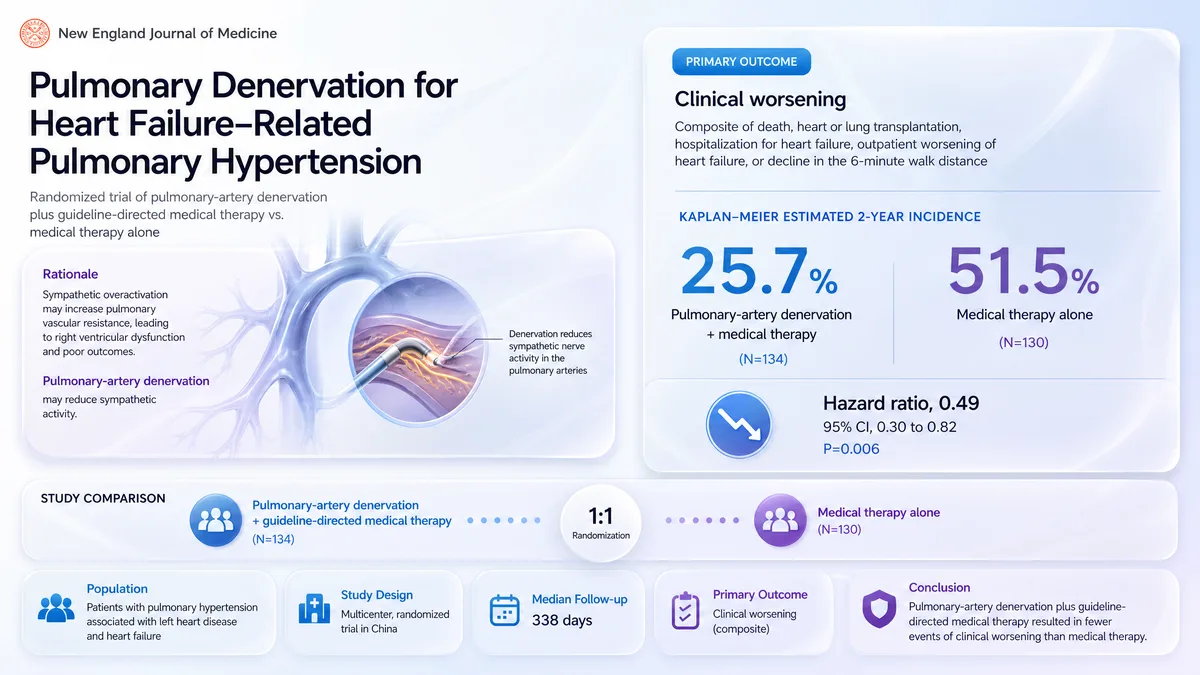
Pulmonary-artery denervation cuts 2-year clinical worsening ~51% versus medical therapy alone.
Pulmonary-artery denervation halves clinical worsening in PH-LHD; extends interventional options beyond medical therapy in this population.
ASACC Journal Scan
“Despite major advances in pharmacologic and device-based therapies, pulmonary hypertension remains one of the strongest predictors of hospitalization, right ventricular failure, and death in patients with left heart disease and heart failure.”
RCT · n=2,23410 次提及Expert CommentaryNEJM Highlight
8月30日ReedNew England Journal of Medicine
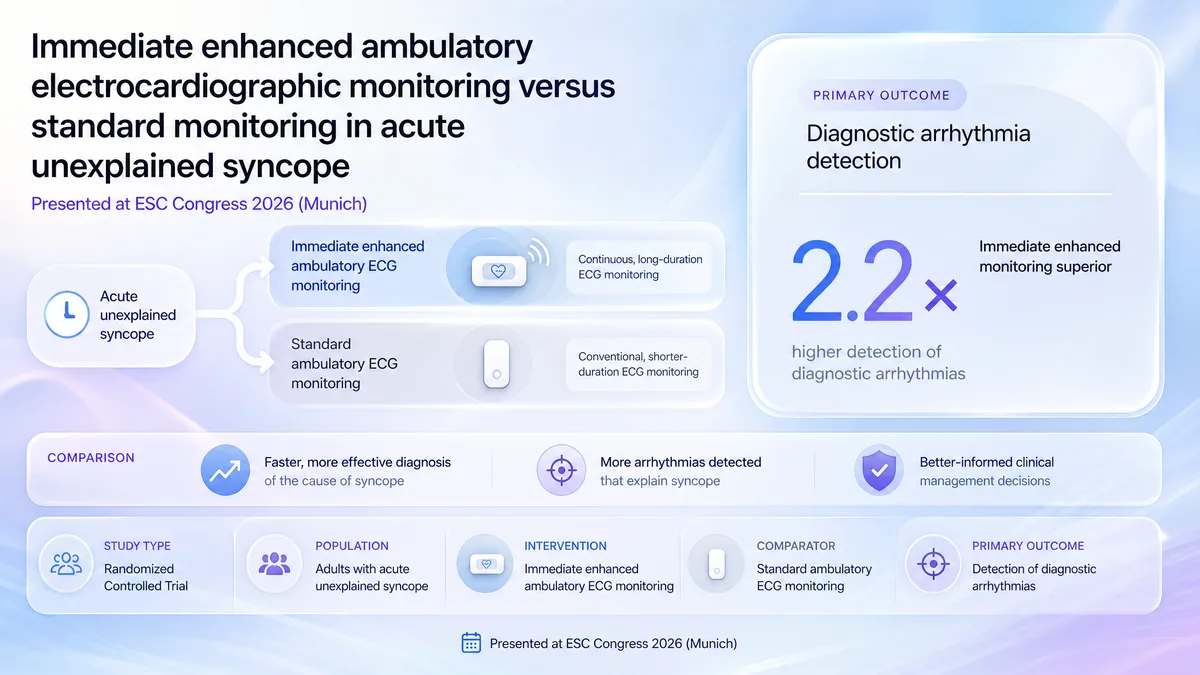
Immediate 14-day wearable ECG monitoring fails to reduce syncope episodes at one year versus standard practice.
Immediate 14-day ECG monitoring does not reduce syncope recurrence at 1 year; challenges routine adoption despite higher arrhythmia detection in unexplained syncope.
ASACC Journal Scan
Early ECG monitoring did not lead to lower recurrence of syncope than standard care. This finding probably reflects the multifactorial nature of syncope, with a clinically important arrhythmia identified in only 22.0% of the intervention group, a result that limited the effects of rhythm-directed...
RCT · n=51716 次提及ACC Journal Scan (X) Highlight
8月28日MasriNew England Journal of Medicine
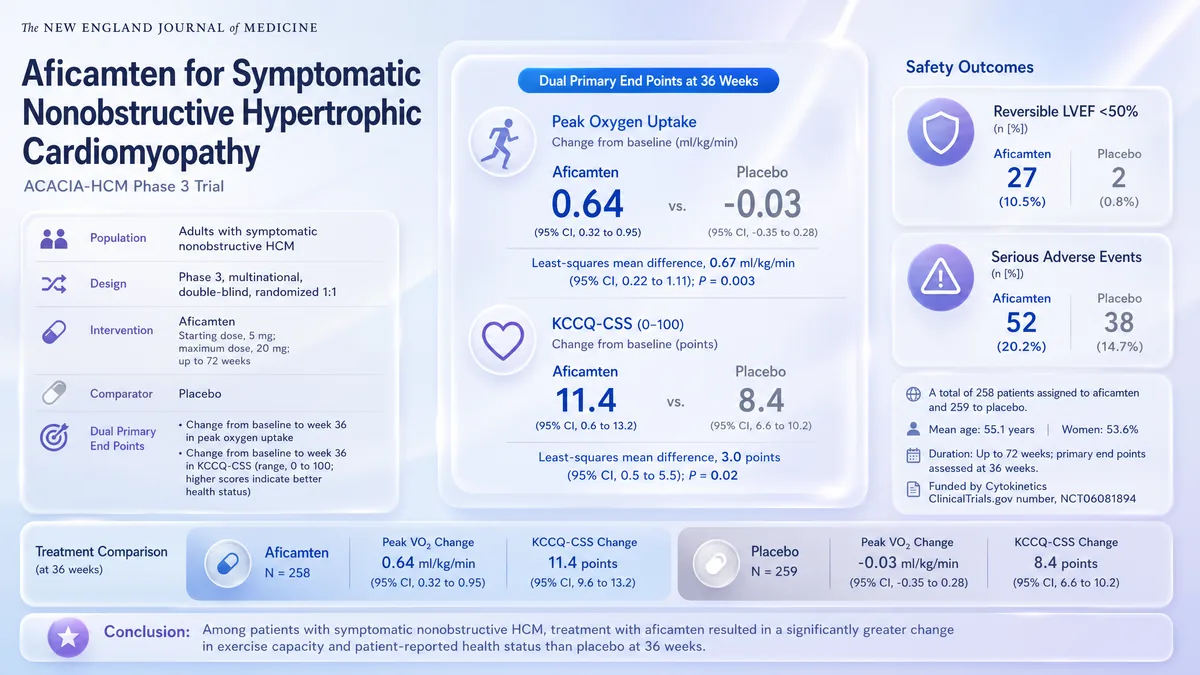
Aficamten improves KCCQ scores by 3 points and peak VO2 vs placebo at 36 weeks.
Provides first targeted option for symptomatic nonobstructive HCM; extends myosin inhibition beyond obstructive disease.
ASACC Journal Scan
For the first time, we have shown clinically meaningful improvements in symptoms and exercise capacity with a treatment that targets the cause of the disease.
RCT · n=14,19417 次提及Medscape Cardiology Highlight
8月29日GibsonNew England Journal of Medicine
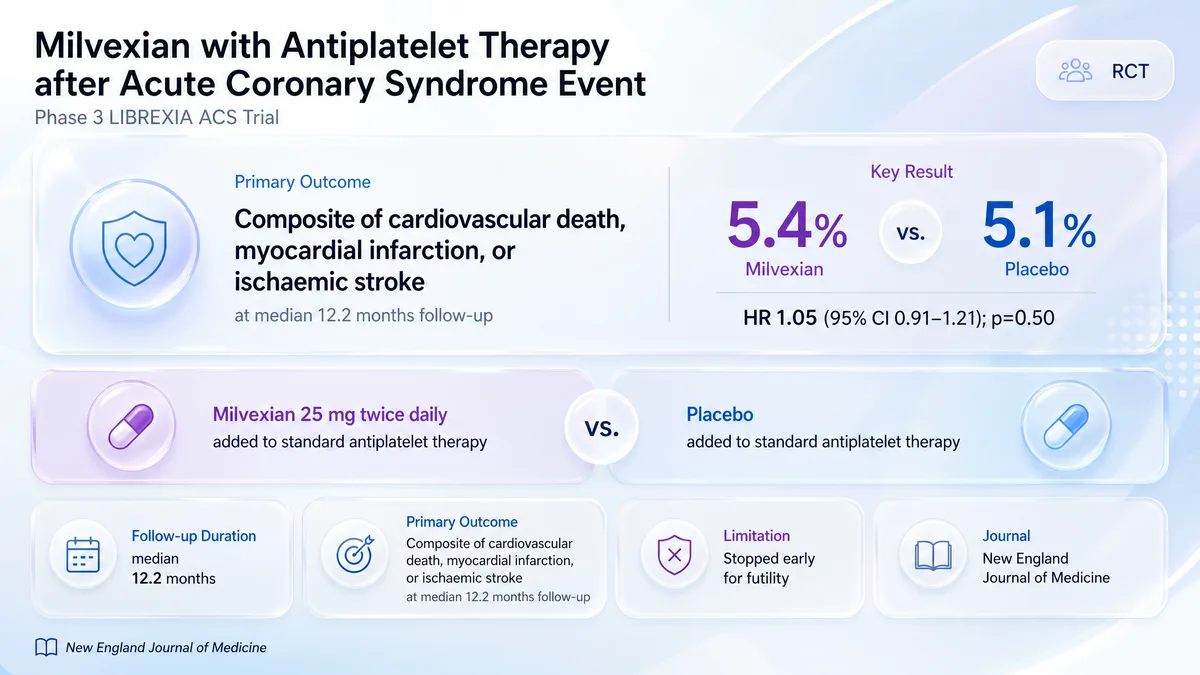
Milvexian shows no benefit over placebo for major cardiovascular events after recent ACS.
Milvexian adds no ischemic benefit after ACS; safety supports continued evaluation in ongoing atrial fibrillation and stroke prevention trials.
MCMedscape Cardiology
“Why is this important in terms of safety? Because milvexian is currently being evaluated in two other large trials: one in atrial fibrillation and one in secondary stroke prevention.”
RCT · n=3,1708 次提及Trending on XExpert Commentary
8月29日LeeNew England Journal of Medicine
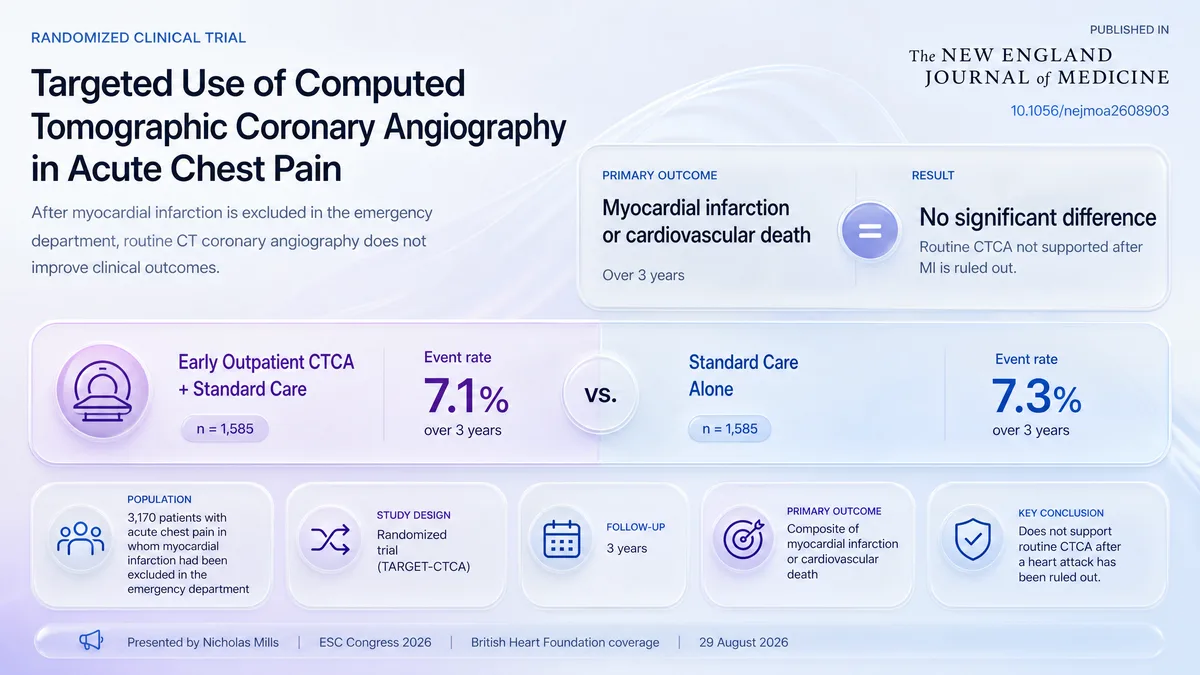
Early outpatient CT coronary angiography fails to reduce MI or CV death versus standard care.
Routine early CTCA adds no benefit after MI exclusion; confirms standard care alone suffices for event reduction in this population.
NMNick Mills
BHF Professor of Cardiology, University of Edinburgh, University of Edinburgh
Our findings provide strong evidence that patients who have had a heart attack excluded do not benefit from early outpatient CTCA scans. Once we are confident that they haven't had a heart attack, we can reassure these patients that their future risk is low and send them home.
RCT · n=3,20311 次提及Expert CommentaryACC Journal Scan (X) Highlight
8月29日LeeNew England Journal of Medicine
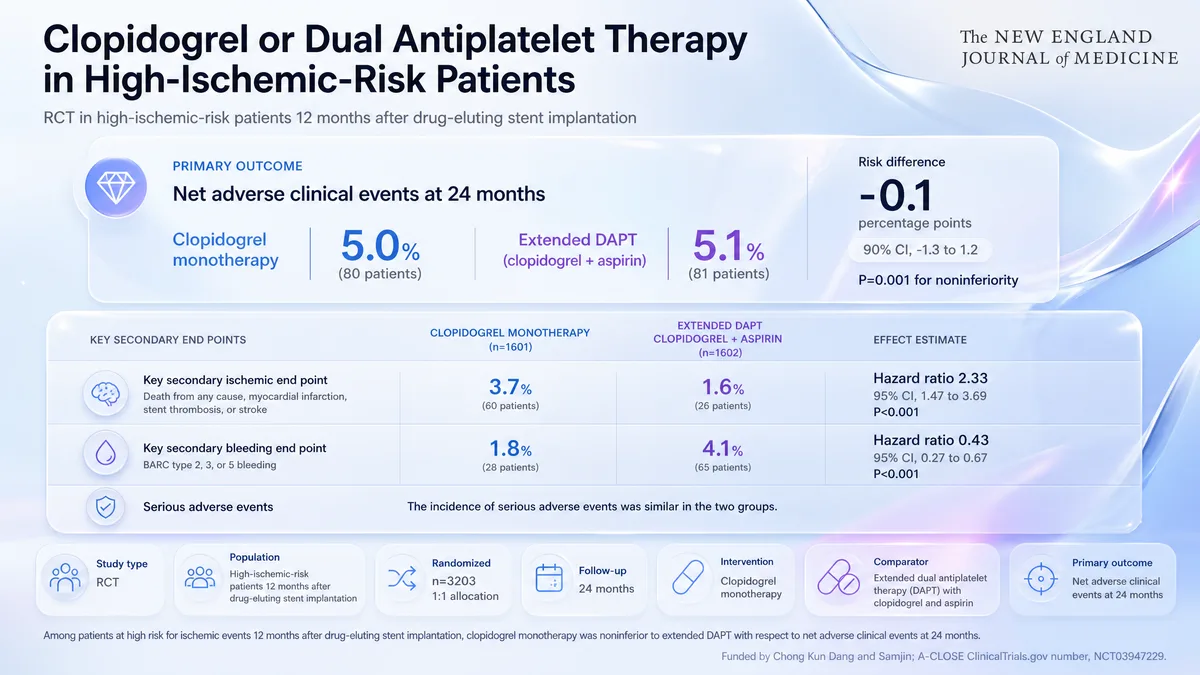
Clopidogrel monotherapy proves noninferior to extended DAPT for net adverse clinical events in high-risk patients.
May support switching to clopidogrel monotherapy after 12 months to reduce bleeding; extends randomized evidence on DAPT de-escalation in high-ischemic-risk patients.
ASACC Journal Scan
Extended DAPT provided greater protection against major ischemic events, including death, whereas clopidogrel monotherapy reduced major or clinically relevant bleeding. It seems that no single strategy is best for every patient, but rather, long-term antiplatelet therapy should be individualized ...